
Last updated November 25, 2026
 Sweep & inspection
 Caps & crowns
 Flue relining
 Masonry repair
 Gas fireplace service
Level 1 sweep and inspection to the NFPA 211 annual standard - flue, crown, cap, and flashing checked and photographed
Chimney sweep logs do not sweep chimneys. They loosen some creosote - which then falls where a brush and vacuum still have to collect it.
Chimney Cleaning Warning Signs: A Fullerton Homeowner’s Reference Guide
Most chimney warning-sign guides point you toward the dramatic stuff: smoke rolling into the room, a visible crack in the firebox, a nest hanging off the cap. Useful, but those are late-stage signals. The trouble with chimneys in Fullerton is quieter than that. A firebox that sits unused for eight or nine months at a stretch can develop problems that never announce themselves loudly, because the system isn’t being exercised enough to show you the obvious symptoms. The subtle early indicators – a smell, a stain, a handle that won’t turn like it used to – are the ones that actually matter here. This guide walks through those early signs specifically, in the order most Fullerton homeowners encounter them.
Quick Answer
The early warning signs of a chimney that needs cleaning or service are: a persistent smell in the room, especially on humid mornings; white or grayish staining on the exterior brick; a damper handle that’s stiff, corroded, or hard to move; a cap screen packed with debris; sooty or flaking staining inside the smoke chamber; fine hairline cracks in the firebox masonry that widen when you press them; and a draft that feels sluggish or pushes smoke back into the room before it clears. If you notice any two or three of these, have the chimney inspected before the next burning season.
Styles & brands we work with
- Sweep & inspection
- Caps & crowns
- Flue relining
- Masonry repair
- Gas fireplace service
Table of Contents
- What Your Chimney’s Smell Is Trying to Tell You
- What to Look For Inside the Firebox Without Any Tools
- Low-Use Warning Signs Unique to Fullerton Chimneys
- Cosmetic vs. Structural Cracks in Firebox Masonry
- Draft Performance: When the Chimney Feels Wrong
- Creosote, Soot, and What Actually Needs Cleaning
- The Cap and Crown: Signs of Trouble on the Roof
- When to Call a Professional
What Your Chimney’s Smell Is Trying to Tell You
If you can smell your chimney from across the living room on a humid morning, that’s not a minor odor problem. It’s concentrated creosote off-gassing, and it usually means the system needs service before you light the first fire of the season. The smell is the chimney telling you it has accumulated a load of creosote and soot that is releasing vapor whenever the air gets damp or the pressure shifts. Fullerton’s warm, humid mornings in the shoulder seasons are exactly the conditions that bring this out, which is why so many local homeowners notice the smell in spring or early fall rather than mid-winter.
Not every smell means the same thing, though. The type of odor narrows down the problem considerably, and it’s the first diagnostic clue a trained inspector uses.
- Campfire or wood-smoke smell inside the room: Creosote buildup in the flue, and often a draft problem pulling chimney air back into the house. This is the smell most common in Fullerton’s low-use chimneys, where the flue never gets hot enough long enough to burn off the residue.
- Musty, damp, or earthy smell: Moisture intrusion. Water is getting into the flue or the masonry and staying there. Often this traces back to a damaged crown, a missing or failing cap, or deteriorated flashing where the chimney meets the roof.
- Acrid or sharp chemical smell: Creosote that has glazed onto the flue walls in a hard, dense layer. Glazed creosote is the type that fuels a chimney fire, and it doesn’t brush off easily. It needs mechanical removal by a professional.
- Animal smell – urine, droppings, or a dead-animal odor: Birds, squirrels, or raccoons have gotten in past a compromised cap or screen. This is common in Fullerton chimneys that sit unused for months at a time, because an open flue looks like a fine place to nest.
There’s a safety point worth stating plainly here. Creosote is flammable, and a heavily loaded flue is a fire waiting for the right conditions. A musty smell that points to moisture intrusion can also degrade the flue liner over time, and a compromised liner is a carbon monoxide concern. We’re not trying to alarm anyone – most of these situations are routine and fixable – but a smell that doesn’t go away is a reason to have the system looked at, not to keep the windows open and hope it clears.
What to Look For Inside the Firebox Without Any Tools
You don’t need equipment to spot the early signs. The firebox is the part of the chimney you can see and reach, and it gives you more information than most homeowners realize. What you’re looking for is the difference between normal wear and the specific patterns that signal a real problem. Here’s what to check, in order:
- Look at the firebrick lining. Healthy firebrick is a consistent color, tight in its joints, with mortar that’s holding firm. Compromised firebrick shows missing chunks, crumbling mortar in the seams, or brick that has come loose and can shift under light finger pressure.
- Check the smoke chamber staining. Look at the sloped section above the damper that funnels smoke up into the flue. A healthy smoke chamber has a light, even coating of soot. Compromised staining looks different: heavy black buildup that’s peeling or flaking in patches, or a glossy, tar-like sheen. That sheen is glazed creosote, and it means the flue needs professional cleaning.
- Test the damper handle. Open and close the damper and feel how it moves. A handle that’s stiff, gritty, or corroded is telling you moisture has been sitting in the system. A damper that won’t seat fully is a draft and carbon monoxide concern.
- Run your hand along the firebox walls. Feel for fine grit that keeps coming off. Constant soot on your fingers after light contact means buildup that brushing would address.
- Look up into the flue as far as you can see. A flashlight helps. You’re looking for visible soot layers, debris, or daylight where it shouldn’t be.
This is a visual check, not a diagnosis. What it does is tell you whether it’s worth making a call. If anything on that list looks off, it’s a good sign the chimney is due for a proper inspection. Our technicians have up to 15 years of experience reading exactly these signs, and the difference between “nothing to worry about” and “let’s look closer” is often something you can spot in a matter of seconds if you know the pattern.
Low-Use Warning Signs Unique to Fullerton Chimneys
Here’s the counterintuitive part. Chimneys that are used heavily year-round tend to show their problems early because everything gets exercised constantly. Chimneys that sit idle nine months out of the year develop a different set of warning signs, and they’re the ones Fullerton homeowners most often miss. The system isn’t worn out – it’s neglected, and neglect leaves its own fingerprints.
Watch for these low-use signals:
- White efflorescence staining on the exterior brick. A chalky white bloom on the outside of the chimney means moisture is migrating through the masonry and evaporating, leaving salts behind. It’s one of the first visible signs of water intrusion, and it shows up on Fullerton chimneys that see no fire for months at a time, because there’s no internal heat to drive moisture out.
- Damper handle corrosion. The cast-iron damper and its handle rust when the system sits damp and unused. A handle that was smooth last season and now feels rough or stiff is telling you the humidity has been working on it.
- Cap screen blockage from debris. Dry leaves, seed pods, and twigs collect on the cap screen over the long off-season. When airflow through the cap gets restricted, the whole chimney loses draft, and no amount of opening the damper fixes it.
- Hairline cracks in the firebox mortar that weren’t there before. The thermal cycle of a single fire after months of rest can open up small cracks in the joints. Most are harmless, but if they keep widening, that’s the first sign of structural movement.
- Musty smell after a humid stretch. Already covered above, but worth repeating: a low-use chimney is a damp chimney, and damp creosote smells.
One more note specific to Fullerton’s climate. Our winters are mild, which means many homes run the fireplace for a few weeks at the edges of the season and then shut it down. That’s exactly the pattern that produces creosote without burning it off. We’ve seen Fullerton chimneys with meaningful creosote buildup after only a handful of fires a season, because each fire was short and cool. It’s not about how much you burn. It’s about how the fires burn.
Cosmetic vs. Structural Cracks in Firebox Masonry
Not every crack is a problem. Some are the surface doing what masonry does when it heats and cools, and they’ll sit there harmlessly for years. Others are the firebox telling you it’s coming apart. Telling them apart without a trained eye comes down to one simple test most homeowners can do with a fingertip.
The press test. Place your fingertip on the crack and press gently. A cosmetic crack stays the same width and feels like a shallow line in the surface. A structural crack opens up, feels like it’s moving, or has a definite edge you can catch a fingernail into. If the crack widens under light pressure, or if the brick on either side can shift, that’s a structural sign, and it needs professional attention before the next fire. The firebox is made of firebrick and mortar for a reason – it’s holding back heat and keeping the fire where it belongs.
Beyond the press test, look for these structural indicators:
- Cracks that run in a continuous line across multiple firebricks. A single brick with a hairline is usually cosmetic. A crack that spans the joint between bricks and continues through several courses is structural.
- Missing mortar joints. When the mortar between firebricks has crumbled away and left gaps, the firebox has lost part of its thermal barrier.
- Spalling brick. The face of the brick peeling off in flakes or flakes already missing.
- Cracks in the smoke chamber above the damper. These are harder to see and the reason a level 1 inspection with a camera matters. Improperly built or deteriorated smoke chambers are a common source of hidden fire risk.
If a crack fails the press test, don’t light a fire in that box until it’s been inspected. Firebox repair is a job for qualified masonry work, not a tube of caulk. Repointing and rebuilding firebox mortar is one of the services we handle, and it’s a repair category that general contractors often overlook entirely because it looks like cosmetic masonry until you know what you’re looking at.
Draft Performance: When the Chimney Feels Wrong
Draft is the invisible part of the chimney system, and it’s the part most likely to give you a warning before anything else does. A chimney that’s working properly pulls air up and out steadily. A chimney with a draft problem feels sluggish, pushes smoke back into the room when you first light a fire, or sounds wrong – a hollow gurgle or a puff of air rather than a steady pull.
Fullerton’s temperature inversions make draft problems more common here than in many other climates. An inversion is what happens when a layer of warm air traps cooler air below it, and it’s a regular feature of late fall and early winter mornings in Southern California’s inland valleys. Smoke wants to rise, but the air outside the chimney is heavier than the air inside it, and the draft stalls. A chimney that drafts perfectly at noon can smoke into the room at seven in the morning. If that’s a consistent pattern in your home, it’s not a weather problem. It’s a chimney problem the weather is exposing.
Here’s what to listen and feel for:
- Smoke that spills into the room on light-up. Every fireplace puffs a little when it’s first lit. If the puff becomes a steady roll and the room fills with smoke before the fire catches, that’s a draft problem.
- A gurgling or popping sound in the flue. Usually a sign of air struggling through a partial blockage.
- A huffing or pulsing feel at the firebox opening. The chimney is fighting itself, often because the flue is partially obstructed or the cap screen is blocked.
- Smoke that lingers and won’t clear. Once the fire is burning well, smoke should go up cleanly. A charge that never quite clears is a sign the flue isn’t pulling.
Draft problems don’t always mean blockage. Sometimes they mean the flue is too small for the firebox, the smoke chamber is the wrong shape, or the cap has been damaged. A level 1 inspection with a camera inspection and photo report is how you find out which. You’ll see exactly what the camera sees.
Creosote, Soot, and What Actually Needs Cleaning
Not every chimney needs to be swept on a schedule. A chimney needs to be swept when it has accumulated enough creosote and soot to be a fire risk or a draft problem. In a low-use Fullerton chimney, that buildup can happen faster than a homeowner expects, because short cool fires produce more creosote than long hot ones. The question isn’t “how many fires have I had,” it’s “what’s in the flue right now.”
Creosote comes in three forms, and how they’re handled depends on which one you have:
- Stage 1: Sooty, flaky creosote. The easiest to remove. Brushed out with standard chimney sweeping tools.
- Stage 2: Hard, crusty creosote. Bonds to the flue wall more firmly. Needs mechanical brushing with the right tools, sometimes rotary.
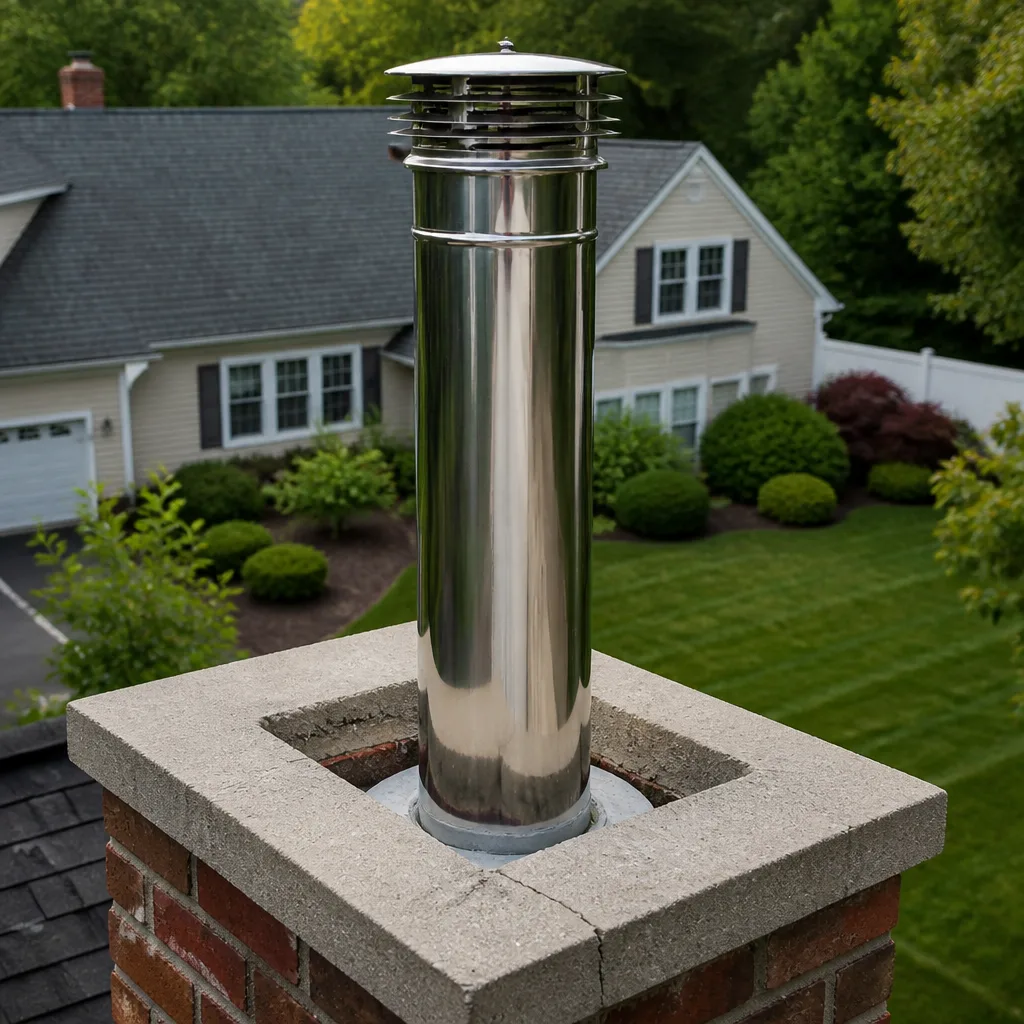
- Stage 3: Glazed creosote. A hard, shiny, tar-like coating that has essentially baked onto the flue. Brushing alone won’t take it off. This is the dangerous stage, and it’s the one that most often calls for liner restoration work rather than simple cleaning.
When the liner itself has deteriorated – cracks, gaps, or a stage 3 situation that’s damaged the flue wall – we use the HeatShield liner resurfacing system to restore the flue without a full-liner replacement. HeatShield is a professional-grade resurfacing product that creates a new, smooth interior surface inside the existing flue. It’s a solution we reach for when the liner is compromised but the chimney structure is sound enough to keep. For more involved structural work, the materials we specify include DuraFlex and Olympia Chimney. Choose materials that are specified by certified chimney professionals, not the cheapest option in the store.
The bigger point about creosote: nothing should be recommended to you without evidence. Camera inspection and a photo report are included with every sweep we perform, so you see the buildup yourself before anyone recommends a repair. If the flue can wait another season, we’ll tell you that too.
The Cap and Crown: Signs of Trouble on the Roof
The two most common sources of chimney water damage are the cap and the crown, and they’re the two things most Fullerton homeowners never look at, because they’re on the roof. A failing cap or crown doesn’t produce a dramatic warning. It produces slow staining, damp smells, and eventually liner damage – which is why it belongs on this list as an early warning sign, not a late-stage one.
What to look for, ideally from the ground with binoculars or after a professional inspection:
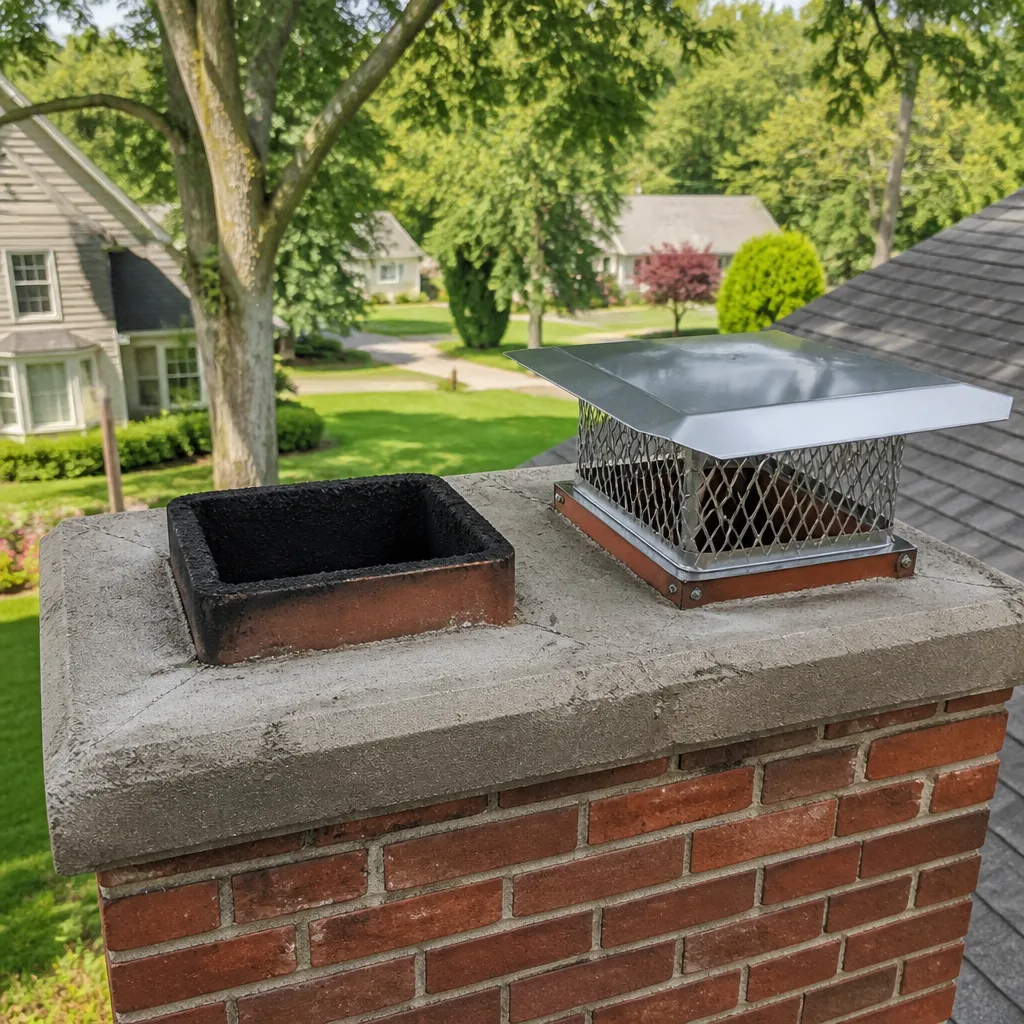
- A missing, loose, or rusted cap. The cap covers the flue opening. Missing or loose means rain, debris, and animals have direct access to the flue. A rusted-out cap still looks present but no longer functions. Purpose-built caps and covers from Gelco and Famco are designed to hold up long-term and to keep out water, animals, and downdrafts.
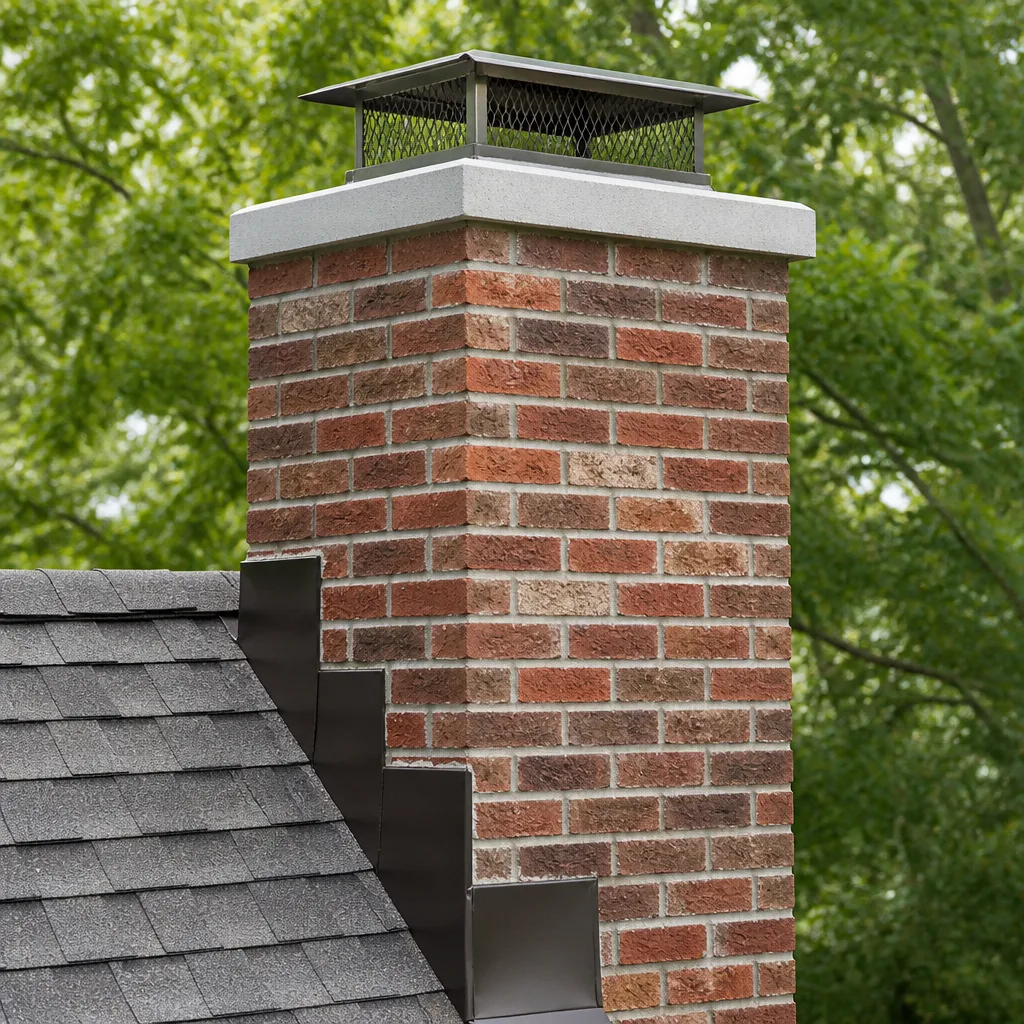
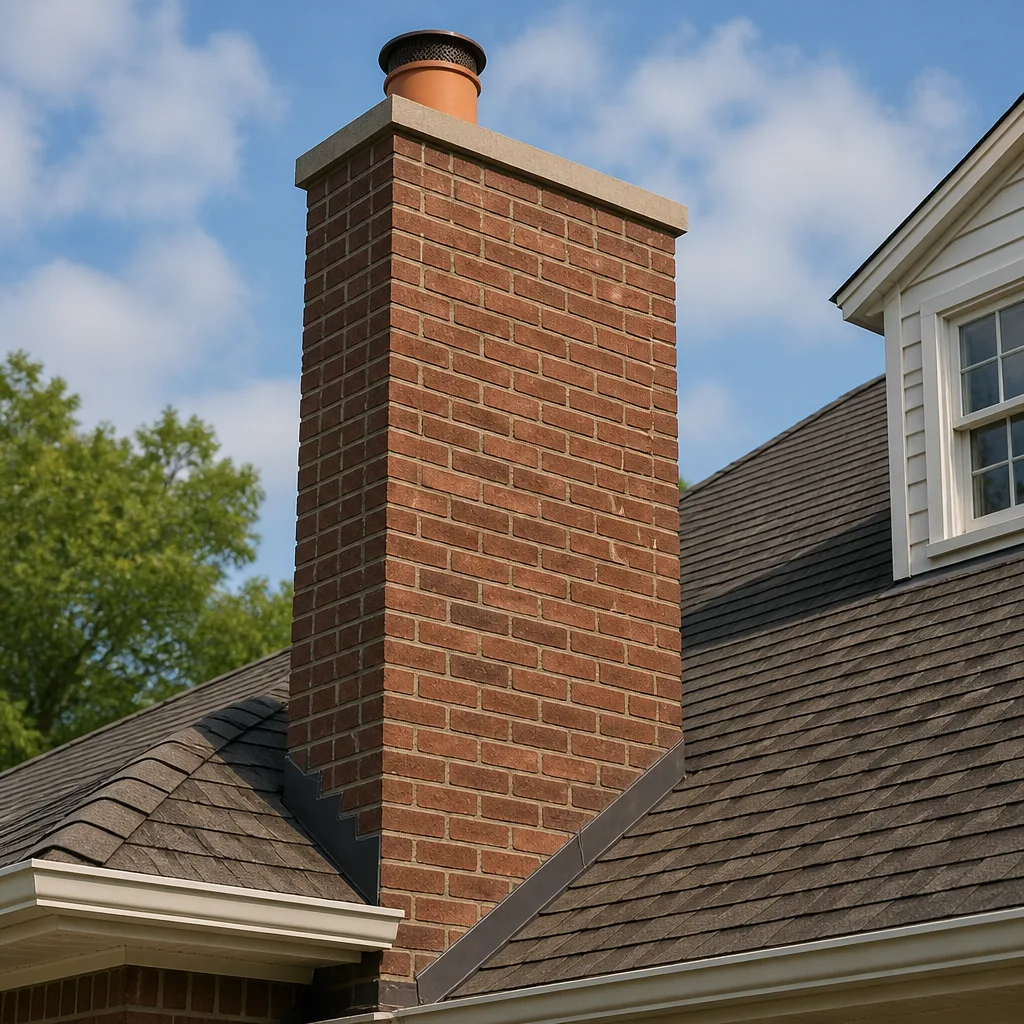
- A crown with visible cracks or separation. The crown is the concrete or masonry slope at the very top of the chimney. Its job is to shed water away from the masonry below. Cracks or separation at the chimney top let water run into the masonry, and that’s where efflorescence and freeze-free deterioration start.
- Failed flashing where the chimney meets the roof. Water often gets in at the roof line, not through the masonry itself. The flashing and the seal around it are worth checking each season.
- Animal activity around the cap. Nests, droppings, or birds circling the chimney are signs the cap or screen is compromised.
Cap and crown work is a category many general contractors overlook entirely. A proper crown rebuild, using a purpose-built product designed to shed water away from the flue, is a genuine part of chimney maintenance, not a cosmetic afterthought. If your crown has cracks, that’s a water problem in the making, and it’s worth having it looked at before it becomes liner work.
When to Call a Professional
Some warning signs are safe to monitor. A single hairline crack that passes the press test can be noted and watched. A slightly stiff damper handle can be worked loose. But several situations genuinely need a trained eye, and they’re worth listing plainly. Call a professional when you smell chimney odor indoors during a humid stretch, when the damper handle is corroded or won’t operate smoothly, when a crack in the firebox widens under pressure, when you see daylight through the flue or soot stains on the smoke chamber, when draft is consistently sluggish or smoke rolls into the room, when the cap is missing or rusted, when the crown has visible cracks, or when the chimney hasn’t been inspected in a few years and you’re getting ready for the season.
If you’re not sure whether what you’re seeing is early or late-stage, that’s fine. Fullerton Chimney Sweep Pros offers free estimates in Fullerton – call (866) 758-3928 to book an inspection. We answer 24/7. Fast dispatch from 7am to 7pm, Sunday through Friday. No recommendation gets made without camera evidence you can see for yourself, and if a repair can safely wait, we’ll say so.
See the difference
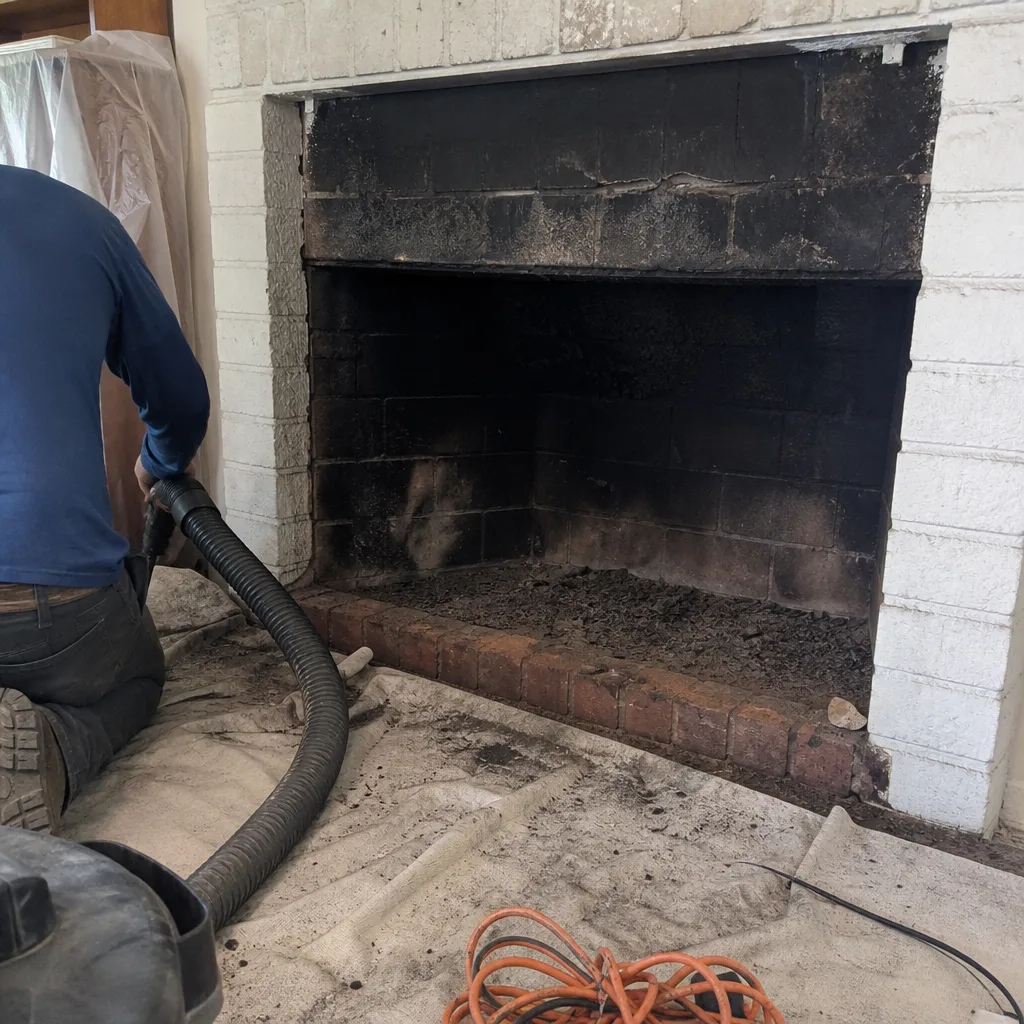 Before
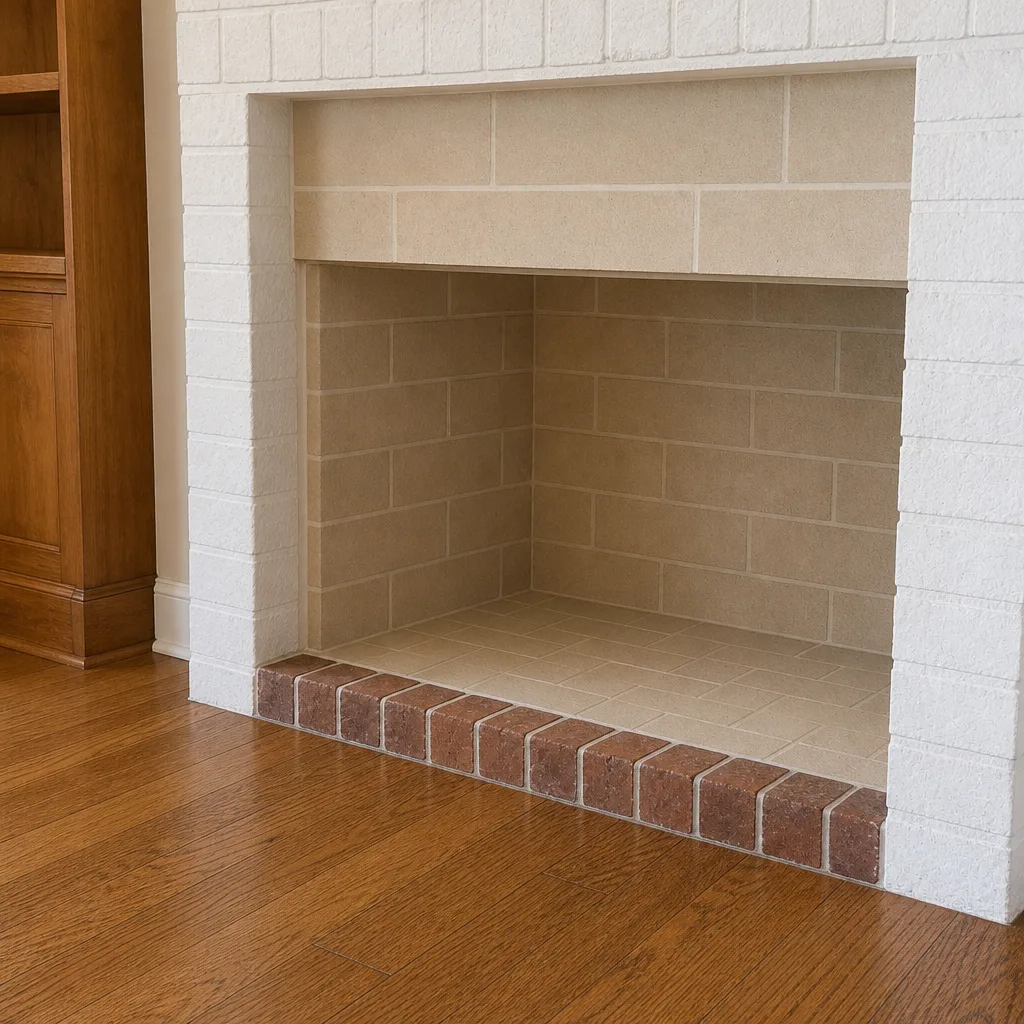 After
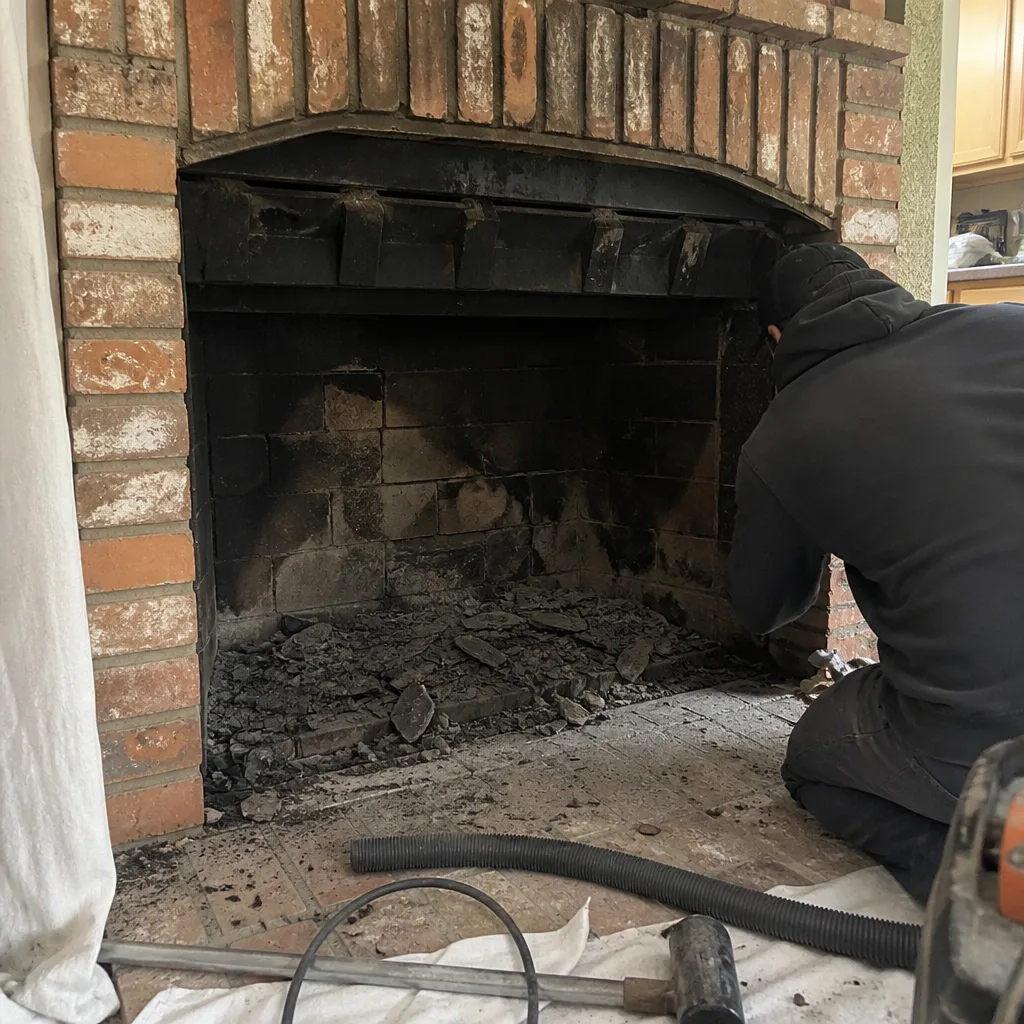 Before
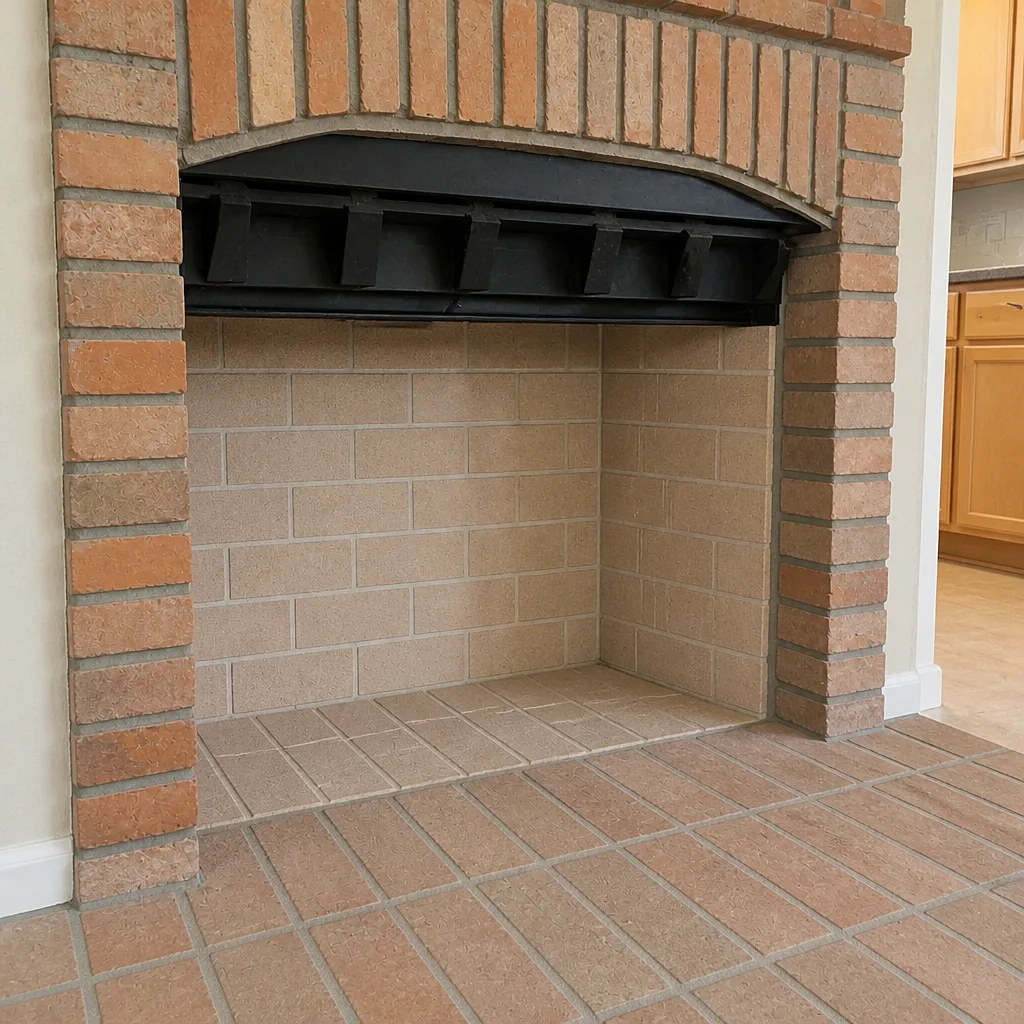 After
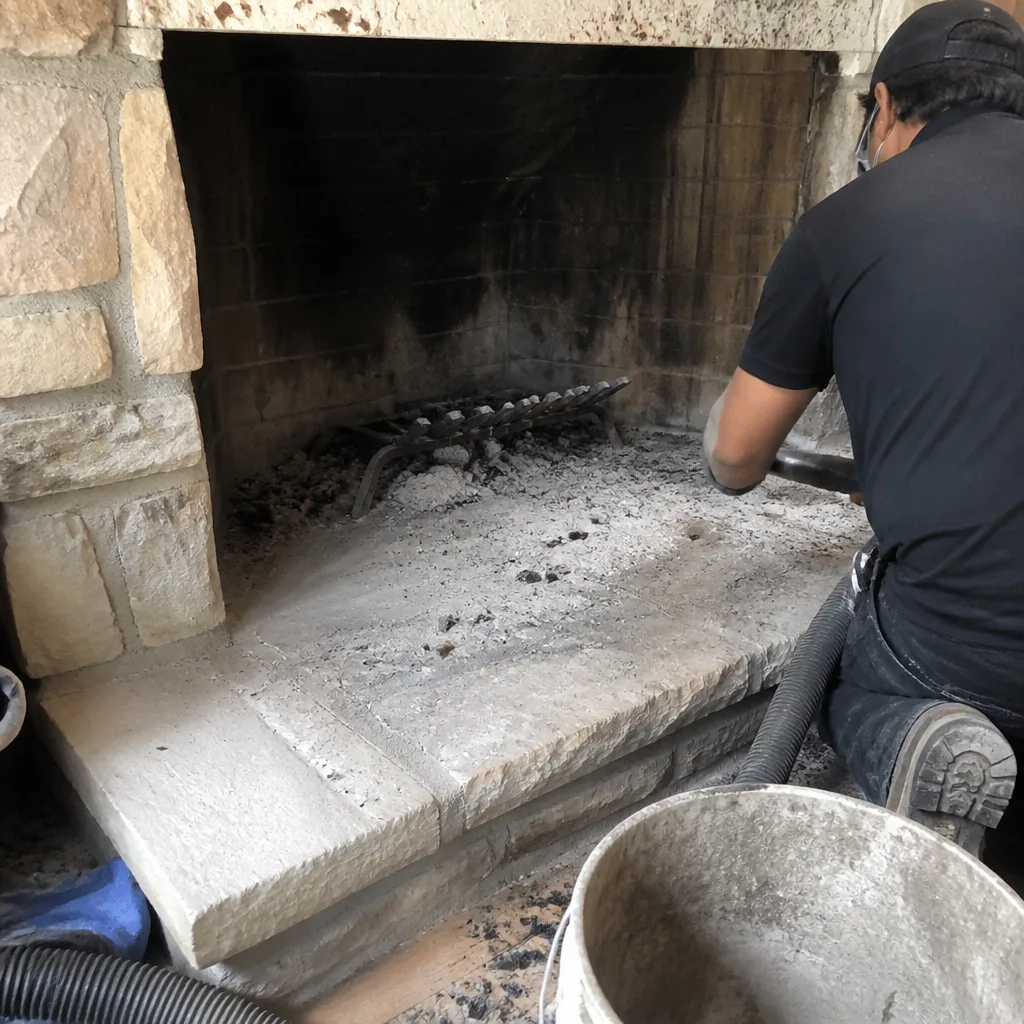 Before
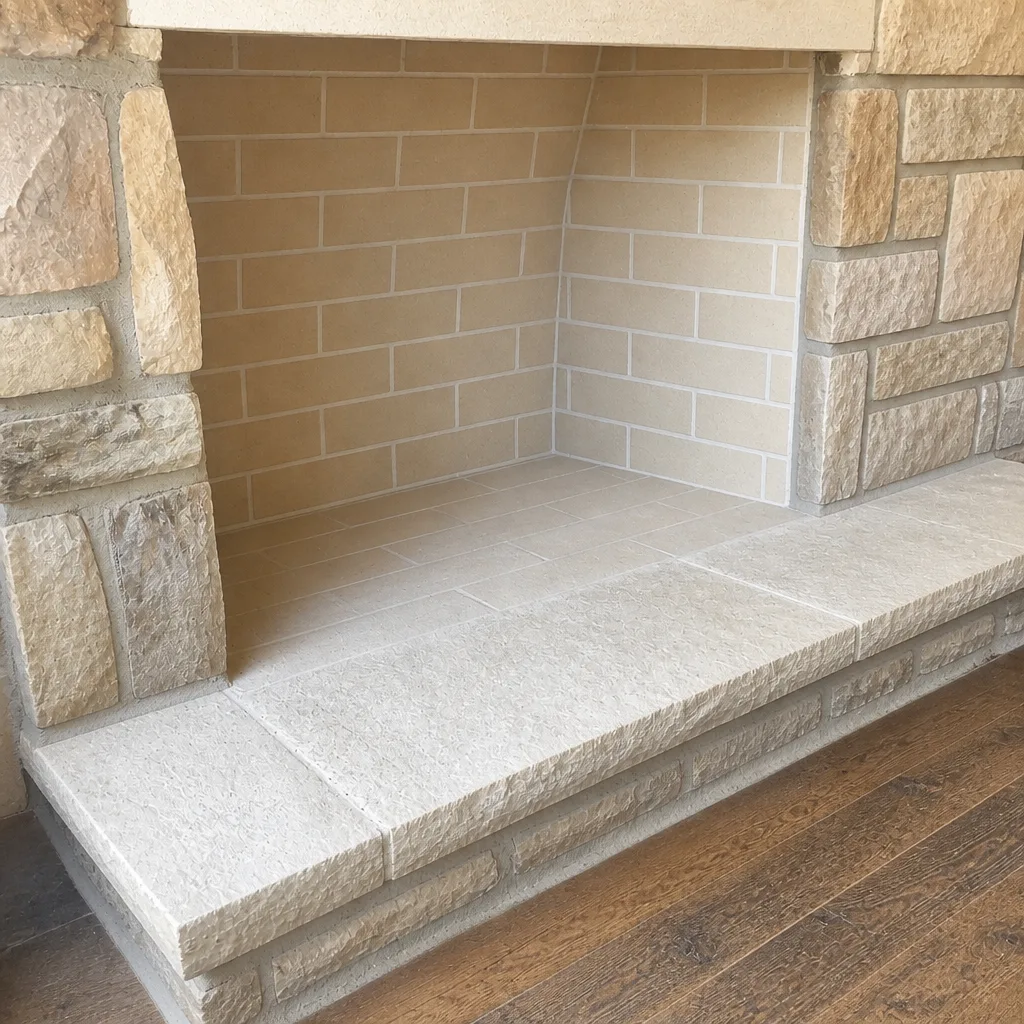 After
Common Mistakes to Avoid
- Assuming a low-use chimney doesn’t need service. The opposite is often true. A Fullerton chimney that sees a few short fires a season is a prime candidate for creosote buildup, because the fires never get hot enough to burn it off.
- Treating a smell as a cosmetic problem. A musty or campfire odor that shows up on humid mornings is a diagnostic sign, not something to mask with a scented candle. It points to creosote, moisture, or both.
- Ignoring a stiff damper handle. Corroded handles are one of the first visible signs of moisture sitting in the system. They’re easy to work around and easy to forget; don’t.
- Cleaning the cap screen yourself from a ladder. Roof work is dangerous work. A blocked cap screen is a professional fix, not a DIY one, and it’s not worth the fall risk.
- Calling a crack “just cosmetic” without testing it. The press test takes ten seconds and tells you whether you can relax or need an inspection. Skipping it because the crack looks small is how small cracks become structural.
- Booking the cheapest sweep and stopping there. A sweep is a cleaning. A chimney inspection is an assessment, and they’re two different services. If the sweep never looked at the firebox, the smoke chamber, or the cap, the visit wasn’t complete.
- Waiting for smoke in the room before acting. By the time smoke rolls indoors, you’re past the early-warning stage. The signs in this Fullerton guide are designed to catch the problem well before that.
Frequently Asked Questions
Most Fullerton chimneys need sweeping once a year if they see any regular use, and once every couple of years if they sit mostly unused. The right interval depends on what’s in the flue, not on a calendar. A camera inspection tells you whether buildup has reached the point where brushing is needed. Call (866) 758-3928 for a free estimate.
Not necessarily. A liner recommendation depends on what the camera shows. Many deteriorating flues can be restored with the HeatShield resurfacing system rather than replaced, and some don’t need work at all. Nothing should be recommended to you without camera evidence you can see for yourself. If the liner can safely wait another season, that’s what we’ll tell you.
Concentrated creosote off-gassing. Humidity pulls the vapor out of creosote residue in the flue, and the smell comes into the room. It’s one of the earliest signs that the chimney has accumulated creosote and is due for service before the next burning season. Call (866) 758-3928 for an exact quote – estimates are free.
Some can and some can’t, and the press test is the quickest way to know which. If the crack stays the same width under light fingertip pressure, it’s usually cosmetic and can be monitored. If it widens or the brick shifts, it needs inspection before the next fire. Call (866) 758-3928 to schedule a level 1 inspection with a camera report.
Creosote builds up in the flue and becomes a fire hazard, and a compromised liner can allow carbon monoxide into the home. Draft problems get worse, moisture intrusion continues to damage the masonry, and small cracks widen into structural repairs. It’s not a scare-tactic list – most of it is gradual and fixable. But the longer it waits, the more of it becomes a real repair. Call (866) 758-3928 to book a sweep and inspection.
A sweep cleans the flue. An inspection assesses the whole system: firebox, smoke chamber, damper, cap, crown, and liner. At Fullerton Chimney Sweep Pros, we perform level 1 and structural inspections as a standalone service, so you can book an inspection without a sweep and get a full picture of what’s going on. For the cleaning piece, our chimney sweep includes camera inspection with a photo report. For structural masonry concerns, our chimney repair service handles firebox and crown work. For damper and firebox component issues, that falls under fireplace repair. Our Fullerton Chimney Sweep Pros team handles each category in-house.
The Bottom Line
Chimney warning signs in Fullerton rarely shout. The ones worth watching for are quiet: a smell on a humid morning, a chalky stain on the exterior brick, a damper handle that won’t move like it should, a crack that widens under your fingertip, a draft that feels sluggish when the season changes. These are the early indicators, and catching them before the season’s first fire is what separates a routine sweep from a real repair. If you’ve spotted two or three of the signs in this guide, book the inspection. The best outcome is hearing “everything looks good” from someone who showed you the camera footage – and if something does need work, you’ll know exactly what and why. Call Fullerton Chimney Sweep Pros to get started on your sweep, inspection, or repair before the burning season begins.
Call (866) 758-3928. We answer 24/7. Fast dispatch from 7am to 7pm, Sunday through Friday.
Written by the team at Fullerton Chimney Sweep Pros.