
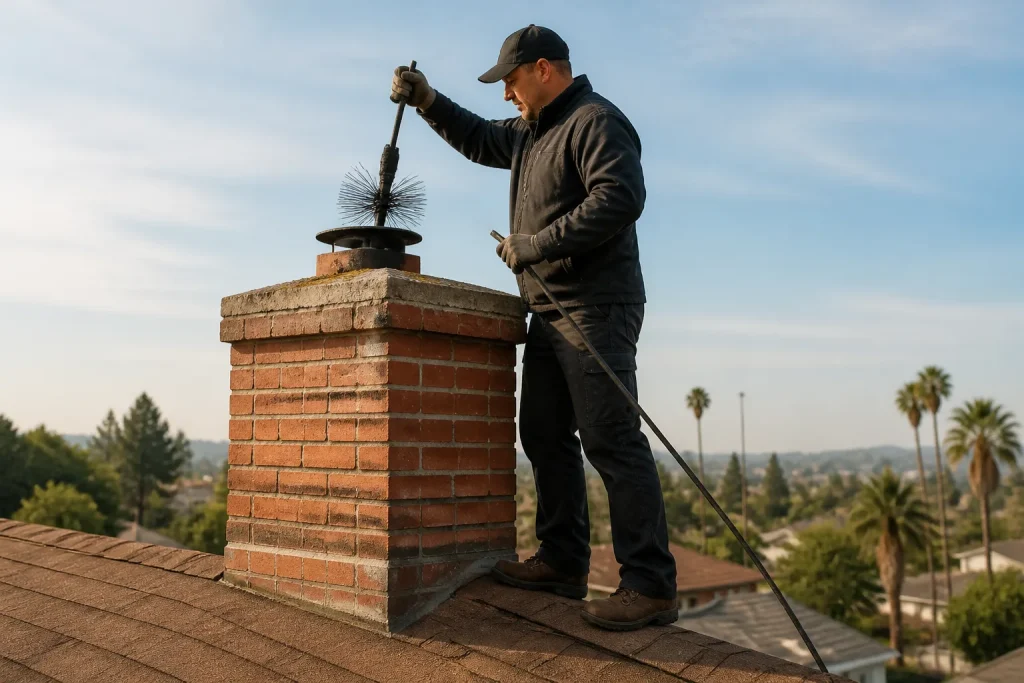
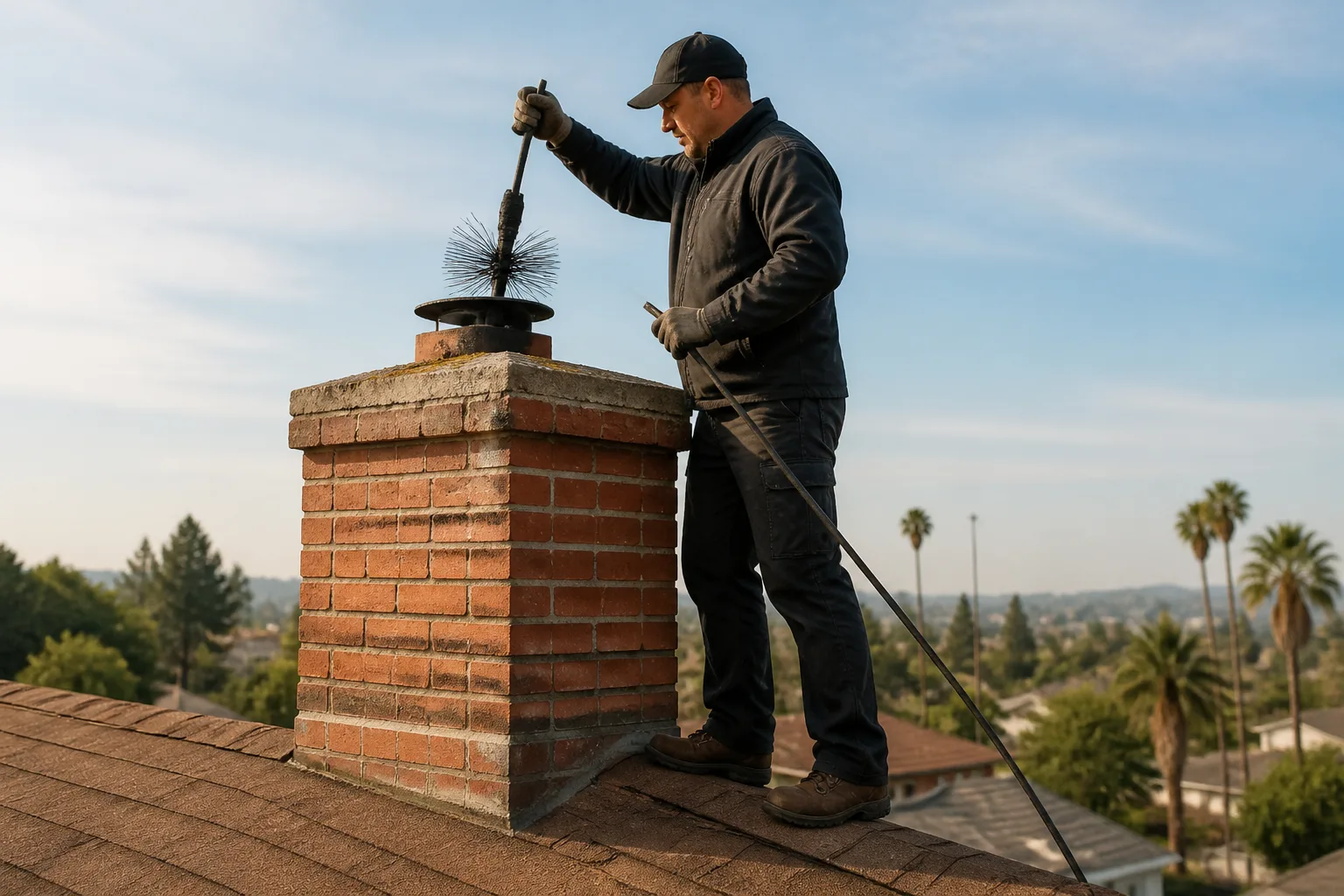
Top Signs You Need Chimney Cleaning Service – Don’t Ignore These
The signs most homeowners watch for, like visible soot or a smoky draft, show up late. By the time a fireback is coated or smoke rolls into the room, the creosote problem has usually been building for a season or more. A chimney can draw perfectly, smell fine, and show nothing from the firebox while carrying enough buildup to meet the industry’s “immediate cleaning required” threshold. That’s why burn frequency alone is a poor cleaning trigger. If you’d rather not diagnose it yourself, call (866) 758-3928 and we’ll schedule a sweep.
Key Takeaways
- The reliable warning signs appear earlier than visible soot, mostly at the firebox glass, the damper plate, and the smoke shelf.
- Fullerton’s typical pattern of decorative fireplace use, often 10 to 20 burns a season, tends to produce glazed creosote faster per burn than heavy wood heat.
- Some signs mean “book a cleaning,” others mean “stop using the fireplace until a technician arrives.”
- A 60-second flashlight check at the smoke shelf and damper plate tells you more than a look at the firebox floor.
- Animals in the flue change a routine sweep into a repair-scope job.
Why the Obvious Signs Come Too Late
Chimney problems develop along a timeline, and the signals most people recognize are near the far end of it. Soot on the firebox walls, a lazy draft, or a smoky smell inside the room are stage-three features. The earlier clues are quieter and easier to miss, which is why a proper inspection matters more than a visual gut check.
Creosote builds in stages. Stage 1 is a light, flaky coating that a sweep removes easily. Stage 2 is denser and stickier. Stage 3 is glazed, shiny, and hard, and it’s the type that poses the greatest fire risk because it can ignite and hold heat. Stage 3 forms invisibly to the casual eye until it’s thick enough to restrict the flue or flake loose.
That’s why we tell Fullerton homeowners to treat what they see from the firebox as a partial picture, not a diagnosis. The chimney is a vertical system, and the part that matters most, the flue liner and the smoke chamber above the damper, is where the trouble usually hides. A professional chimney sweep paired with a proper inspection reads the whole system, not just the visible firebox. The local technician is licensed and insured as their state requires, and you’ll get a flat price agreed before the sweep is booked.
Early-Stage Signs Most Homeowners Miss
These three signals show up before the obvious ones, and each has a specific mechanical meaning that tells a technician a lot about what’s happening inside the flue.
- Fireplace glass darkening faster than usual. If the glass on a gas or glass-front fireplace clouds up or darkens in a few burns rather than over a full season, it often points to incomplete combustion or a draft imbalance, not just soot. A partially blocked or restricted flue changes how gases move, and the glass catches the residue first. Darkening glass is one of the earliest markers that the flue needs a look, even with a perfectly happy-looking fire.
- A faint sulfur odor on cool mornings. That egg-like smell on a chilly day usually comes from creosote and moisture reacting inside the flue or from a downdraft pushing stale flue gases back into the room. It’s a draft and buildup signal, not a sign to panic, but it’s a reason to move the cleaning up the calendar. If the smell is strong and constant, treat it as the “don’t use this until checked” category covered below.
- Animals investigating the chase. Birds, squirrels, and raccoons scout chimneys as den space, and the first sign is often noise, nesting debris, or a cap that’s been worked loose. An animal at the top of the chase often means there’s no effective cap or crown protection. It’s both a cleaning trigger and a structural signal.
When we see glass darkening combined with a sulfur smell and an unsealed cap, the pattern usually points to the same root cause: draft disruption plus buildup. Fixing one without the other rarely holds. Proper caps and crowns from makers like Gelco and Famco are designed for exactly this, blocking water, animals, and the draft problems that follow. You can read more about our approach on the Fullerton Chimney Sweep Pros page.
Why Fullerton’s Low-Usage Fireplace Pattern Makes Creosote Harder to Remove
Here’s a counterintuitive point that surprises a lot of Fullerton homeowners: burning less often can mean a harder cleaning, not an easier one. A fireplace used for ambiance, say 10 to 20 fires a season, tends to burn cool and smolder. Those cool, oxygen-starved burns produce more creosote per fire than a hot, well-ventilated burn. Over a few seasons, that residue thickens into glazed, stage-three creosote, which is the toughest to remove.
The mistake is assuming that fewer fires means a less frequent sweep. Our technicians have up to 15 years of experience, and the pattern they see repeatedly in Fullerton is a lightly used fireplace with stubborn, baked-on deposits that a high-frequency wood-heat household might never accumulate.
This is where the right tools and materials matter. A standard sweep handles the light stuff. Glazed deposits sometimes need chemical treatment or, when the liner itself is compromised, a restoration approach. We use HeatShield, a professional flue resurfacing system, so a deteriorating liner can often be restored without a full replacement. That’s the difference between a quick sweep and a proper diagnosis.
Which Signs Mean “Book a Cleaning” vs. “Stop Using It”
Not every warning sign carries the same urgency, and knowing the difference keeps you safe without panicking over normal wear. Here’s how we sort them.
Schedule a cleaning:
- Glass darkening faster than usual
- A faint sulfur odor on cold days
- Minor soot on the firebox walls
- It’s simply been a while since the last sweep and you’ve burned a normal amount
Stop using the fireplace until a technician arrives:
- Smoke rolling into the room on a fire that used to draw cleanly
- A strong, constant chemical or sulfur smell, inside or around the chimney
- Visible glazed, shiny creosote on the damper or smoke chamber
- Any sign of animals or nesting material in the flue
- Damaged or missing cap and crown, especially after storm damage
The “stop” list exists because a restricted or damaged flue combined with active fire is a carbon monoxide and chimney fire risk. We say that plainly, not to frighten anyone, but because it’s the honest line. When in doubt, don’t light it. Call us and we’ll talk through what you’re seeing. We answer 24/7.
When it’s time to fix what the inspection finds, whether that’s a cracked crown, damaged masonry, or firebox issues, our chimney repair and fireplace repair work covers the full system so you’re not handed off to a second contractor.
The 60-Second Flashlight Check That Reveals More Than You’d Think
You can check the top of the firebox yourself in about a minute, and it will tell you more than staring at the fire ever will. You’re looking, not disassembling.
- Shine the light up past the damper. With the damper open, aim a strong flashlight up into the smoke chamber.
- Look for shiny, glassy texture. Dull soot is normal. A wet-looking, glazed surface is creosote that needs professional removal.
- Check the damper plate. Look for rust, warping, or buildup that could stop it from opening fully.
- Look for daylight leaking through the flue. Gaps or cracks in the liner or masonry are structural signals, not cleaning ones.
- Sniff near the damper on a day with no fire. A sulfur smell or a cold-draft odor is worth following up.
If the flashlight shows glazed creosote, cracks, or anything that makes you uncomfortable, that’s a “stop using it” moment. If it just looks dusty and dull, book a cleaning and get ahead of it. The check is a starting point, never a full diagnosis. The inside of the flue still needs a trained eye and pro tools.
Why an Animal in the Flue Changes the Whole Job
When a bird or raccoon gets into the chase, the job stops being a routine sweep and becomes a two-part service: clearing the flue and fixing whatever let the animal in. Nesting material, feathers, and droppings all need removal before it’s safe to burn again. And that material is a fire hazard in its own right. But the bigger concern is often what the animal’s presence reveals.
Animals get in when the cap is missing, loose, or damaged. Raccoons can tear apart weak components. Birds nest in uncapped flues season after season. A flue that’s been open to the weather and wildlife for a while often has water damage, a compromised crown, or a liner problem underneath. That’s why we treat an animal intrusion as both a cleaning trigger and a structural inspection. A purpose-built cap from Gelco or Famco, or a properly fitted Olympia Chimney component, seals the flue so it doesn’t happen again.
This is also why we install caps and crowns as a dedicated service. Water and animal intrusion are the leading causes of long-term chimney deterioration, and they’re exactly the repairs many general contractors overlook. Fixing the cause beats cleaning the flue every season and hoping the raccoons move on. If you’re in Fullerton and want a proper assessment, our free estimate starts with photos and an honest recommendation, including when work can safely wait.
When to Call a Pro
Call a professional if any sign on the “stop” list applies, if your flashlight check shows glazed creosote or cracks, or if it’s simply been long enough that you can’t remember the last sweep. A chimney with no visible deposits can still carry dangerous buildup. That’s the whole point of an inspection. The local pro is licensed and insured as their state requires, and you’ll get a flat price agreed before the sweep is booked.
Related services in Fullerton: chimney sweeping, chimney inspection, fireplace repair, chimney repair, and chimney cap and crown installation. One call handles all five.
The Bottom Line
The signs that matter most arrive early and quietly, at the glass, the damper, and the smoke shelf. If you catch them there, you book a cleaning. If you wait for soot and smoke, you may be looking at a repair. Fullerton Chimney Sweep Pros handles the full chimney lifecycle in one call, with professional-grade materials from brands specialists actually use, so you’re not handed off to a second contractor.
If you’re in Fullerton and need help, Fullerton Chimney Sweep Pros offers free estimates. Call (866) 758-3928. We answer 24/7, with fast dispatch from 7am to 7pm, Sunday through Friday. We’re closed on Saturday. Any call outside dispatch hours is booked into the next opening.
Frequently Asked Questions
Occasional use still needs a regular sweep, because cool, low-usage burns produce glazed creosote faster per fire than hot burns do. A common guideline is an annual inspection, with sweeping based on what the inspection finds. A lightly used Fullerton fireplace can accumulate stage-three creosote in a few seasons, so don’t assume fewer fires means you can skip it entirely. Call (866) 758-3928 for a free estimate.
You can handle light, flaky creosote with a brush, but glazed stage-three creosote and any structural issue require professional tools and training. The safety risk of a restricted flue, and of missing a liner crack, makes DIY cleaning a poor fit for anything beyond routine upkeep. Call (866) 758-3928 and we’ll assess what you actually have.
Glazed creosote can ignite and burn hot enough to damage the flue liner and spread into the chimney structure, and a restricted flue can push carbon monoxide back into the living space. We’re not trying to frighten anyone, but those are the real risks when early signals go unaddressed. If you’ve ignored the signs, stop burning and get an inspection. Call (866) 758-3928.
Not always, but it often means more than a sweep. An animal usually gets in through a missing or damaged cap, so the intrusion is a sign to check the cap, crown, and liner, not just clear the flue. We treat it as both a cleaning and a structural check. Call (866) 758-3928 for a free estimate and photos you can see for yourself.
Written by the team at Fullerton Chimney Sweep Pros.
Need Chimney Cleaning Help?
Call Fullerton Chimney Sweep Pros - the local pro we connect you with is licensed and insured, here with fast help in Fullerton.
(866) 758-3928